What's the Worst Position to Sleep in for Sleep Apnea?
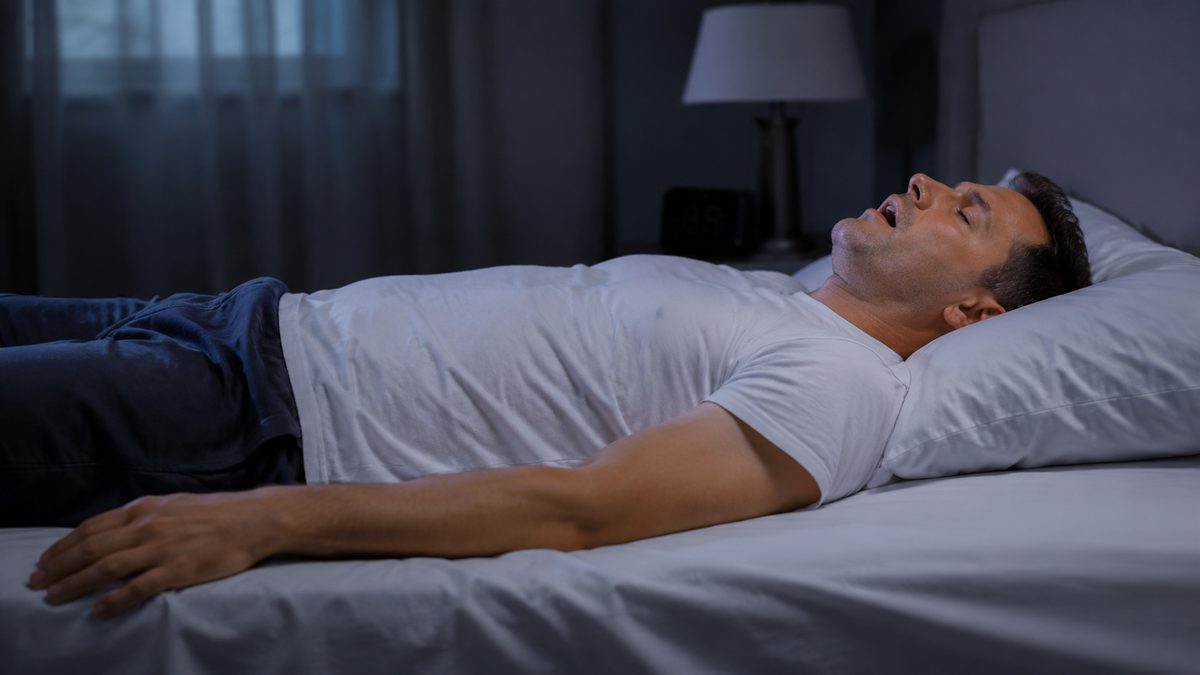
Back sleeping is the worst position for sleep apnea. When you lie on your back, gravity pulls your tongue and the soft tissues at the back of your throat directly into your airway. That narrows the passage.
Your muscles can't compensate fast enough, and your airway collapses. Breathing stops. This happens dozens, sometimes hundreds, of times a night.
Studies show the apnea-hypopnea index (AHI), the number of breathing events per hour, runs at 84.4 events per hour on the back versus 73.6 events per hour on the side. More than half of all obstructive sleep apnea patients have what researchers call supine-related OSA, where symptoms are most severe when lying flat on the back. Understanding how rare it is dying from sleep apnea helps contextualize the severity. how often sleep apnea leads to fatal outcomes
Switching to your side won't cure sleep apnea, but it can meaningfully cut the number of times you stop breathing each night.
Why Does Back Sleeping Make Sleep Apnea So Much Worse?
When you sleep on your back, three things work against you at once.
First, gravity. Your tongue is a muscle, and like all muscles it relaxes during sleep. On your back, it falls straight back toward your throat. Your soft palate and uvula drop too. The whole structure above your airway becomes a curtain that blocks airflow.
Second, lung volume drops. Lying flat compresses your chest slightly, which reduces the natural tension that helps hold your airway open from below. Less lung volume means less mechanical traction on the airway walls.
Third, your airway dilator muscles, the ones that should pull the throat open when pressure drops during inhalation, can't keep up with the collapse pressure in this position. They're working against gravity on top of everything else.
A systematic review covering 25 years of research confirmed this pattern: supine sleep posture consistently produces more severe OSA in adults across study after study. This isn't a fringe finding. It's one of the most replicated observations in sleep medicine.
What Sleeping Position Worsens Sleep Apnea Beyond Just Lying Flat?
Back sleeping is the main culprit, but how you lie on your back also matters. Preliminary research suggests that head position changes things. Head flexion, chin tilting toward your chest, and certain rotations appear to influence how easily the airway collapses.
One of my clients tried propping their head up with extra pillows thinking this would help. What they'd actually done was flex their chin toward their chest, which shortened and narrowed the throat from the front. Their partner noticed the snoring got worse.
When they swapped to a contoured pillow that kept their neck in a neutral position, the snoring dropped noticeably. The takeaway: back sleeping is bad, but back sleeping with your chin tucked or your head tilted might be worse. If you must sleep on your back, a neutral neck position is the least harmful way to do it.
What Is the Pillow Trick for Sleep Apnea?
The pillow trick refers to using a wedge pillow or elevated support to raise your head and upper body to around 30 to 45 degrees. This position uses gravity differently. Instead of letting soft tissue fall back into the airway, elevation lets it fall slightly forward and down, reducing the blockage.
This works best for mild to moderate cases. I've seen clients who couldn't tolerate a CPAP mask get real relief from sleeping on a wedge pillow. It's not a replacement for proper assessment and treatment, but as a low-effort first step it has genuine evidence behind it. Professional guidance on sleep apnea treatment options can help you find what works best.
A second version of the pillow trick is specifically about side sleeping. If you put a firm pillow between your knees and hug a body pillow in front of you, it becomes much harder to roll onto your back during the night. The position locks you in place. Simple and cheap.
Some people sew a tennis ball or foam ball into the back of their sleep shirt, an old but effective strategy. The discomfort of rolling onto it wakes you just enough to roll back without fully disrupting sleep. Newer commercial products do the same thing with vibrating sensors.
What Is the Japanese Trick for Sleep Apnea?
This phrase circulates widely online and refers to a set of throat and tongue exercises sometimes called oropharyngeal exercises or myofunctional therapy. The exercises strengthen the muscles of the tongue, soft palate, and throat so they're less likely to collapse during sleep.
A 2015 randomised trial found that these exercises reduced AHI by about 39% in adults with moderate obstructive sleep apnea. They're not a cure, and they work best for mild to moderate cases or as a complement to other treatments.
The core exercises typically include pressing the tongue flat against the roof of the mouth, holding it there, and repeating. Chewing motions, vowel sounds spoken with exaggerated mouth movement, and swallowing exercises are also part of the protocol. Done consistently for several weeks, they build the muscular tone that helps keep your airway open.
In my experience, the people who stick with these see results. The people who do them twice and give up don't. It's like any muscle training. Consistency is what produces the change.
What Is the 4% Rule for Sleep Apnea?
The 4% rule relates to how oxygen desaturation events are scored during a sleep study. Specifically, it refers to counting an apnea event only when your blood oxygen level drops by 4% or more from baseline. This is one of two common scoring thresholds used in polysomnography. The other is 3%.
Why does this matter to you? Because the threshold used during your sleep study changes how severe your apnea looks on paper. A 4% threshold produces a lower AHI score than a 3% threshold for the same person on the same night. Some people who appear to have mild apnea under the 4% rule have moderate apnea under the 3% rule.
If you've had a sleep study and your results feel inconsistent with how you feel during the day, exhausted, foggy, waking unrefreshed, it's worth asking your doctor which threshold was used and whether retesting or retitration makes sense.
Does Sleep Stage Change How Bad Apnea Gets?
Yes. And this is something most articles skip over entirely.
Apnea episodes last significantly longer during REM sleep than during non-REM sleep. That's 32.5 seconds on average during REM versus 23.5 seconds during non-REM. REM sleep is when your muscles are most relaxed. That's by design; it prevents you from acting out your dreams. But it also means your airway muscles get less support precisely when your sleep is deepest and most restorative.
This matters practically because REM sleep clusters in the second half of the night. Many people with mild apnea feel fine after five hours but wreck their recovery by sleeping a full eight. Their REM-heavy second half is full of long, uncorrected apnea events.
Sleeping on your side helps during REM too. The AHI difference between back and side sleeping holds across both non-REM (103 events per hour on the back versus 80.3 on the side) and into REM. Side sleeping reduces the burden across all sleep stages.
What About Stomach Sleeping?
Stomach sleeping removes the gravity problem that makes back sleeping so harmful. For some people with sleep apnea, prone sleep reduces AHI significantly. However, the evidence is mixed and inconsistent. It works well for some people and poorly for others, and the mechanics aren't fully understood.
The practical problem is that stomach sleeping puts pressure on your neck and spine if you turn your head to breathe. Sustained neck rotation creates its own problems over time: stiffness, cervicogenic headaches, shoulder strain. I've had clients who cleared up their apnea symptoms somewhat by going prone but then came back with neck pain that disrupted their sleep in a different way.
Stomach sleeping is worth trying if side sleeping genuinely doesn't work for you. But go in with realistic expectations and pay attention to how your neck and back feel in the morning.
Three Things Most Articles Get Wrong About Sleep Position and Apnea
1. Positional therapy isn't just for mild cases. Many sources imply that if you have moderate or severe sleep apnea, position doesn't matter, just use CPAP. But research shows positional change reduces AHI even in moderate-to-severe cases. Side sleeping alongside CPAP often improves outcomes more than CPAP alone. It's not either-or.
2. Kids are affected the same way. The positional effect on sleep apnea isn't limited to adults. Children with Down syndrome, for example, show significantly higher AHI in the supine position during non-REM sleep compared to non-supine positions. Parents and carers who are managing childhood sleep apnea should know that position matters for their child too.
3. Getting off your back is a real intervention, not a placeholder. Positional therapy is often described as something you do while waiting for a CPAP prescription or surgery. In reality, for patients with purely positional OSA, where AHI normalises in the lateral position, it can be the primary treatment. A systematic review and over two decades of clinical data back this up. It's not a consolation prize.
What Helps Beyond Changing Your Position?
Position is the single biggest modifiable factor you can address tonight without equipment. But it fits inside a broader picture.
CPAP (continuous positive airway pressure) remains the gold standard for moderate-to-severe obstructive sleep apnea. It delivers pressurised air through a mask to physically hold the airway open. When people use it consistently, it works. The barrier is tolerance. Many people find the mask uncomfortable. Sleeping on your side can reduce the pressure your CPAP needs to deliver, which improves comfort and compliance.
Uvulopalatopharyngoplasty (UPPP) and other surgical options exist for people with specific anatomical causes. Surgery removes or restructures the soft tissue that blocks the airway. Results vary depending on the individual's anatomy.
Weight loss reduces OSA severity in people who are overweight because excess tissue around the neck compresses the airway from outside. This is a slow fix, not a quick one, but it has durable effects.
Myofunctional therapy (those throat exercises mentioned earlier) builds muscle tone in the airway and has a growing evidence base. It's especially useful for people who can't or won't use CPAP.
None of these replace a proper diagnosis. A sleep study, either in a clinic or with a home test kit, gives you actual data on how many events you're having, how long they last, and how much your oxygen drops. That data drives every other decision.
Frequently Asked Questions
Can changing sleep position alone treat sleep apnea?
For mild positional OSA, where AHI normalises on your side, yes, it can be a primary treatment. For moderate to severe cases, it reduces severity but doesn't resolve it. Always confirm results with a follow-up sleep study.
How do I stop rolling onto my back at night?
A body pillow in front of you and a firm pillow or rolled towel behind your back makes it physically awkward to roll. Tennis ball in the back of your shirt is low-tech and effective. Positional alarm devices sense your body position and vibrate gently when you roll supine.
Is sleeping on the left or right side better for sleep apnea?
Either side is significantly better than your back. Some research suggests the left side may be marginally better for reducing reflux, which can worsen apnea, but both sides produce similar apnea outcomes. Pick whichever side you find more comfortable.
Does a higher pillow help sleep apnea?
Elevating your head 30 to 45 degrees can help by reducing the pressure of soft tissue on your airway. A wedge pillow achieves this more effectively than stacking standard pillows, which tend to flex your neck forward and can actually worsen airflow.
Can sleep apnea go away on its own?
Rarely, and only when an underlying cause is removed: significant weight loss, resolution of nasal congestion, or in some children whose airway anatomy matures. In most adults, untreated sleep apnea persists and typically worsens over time.
What to Do Tonight
Sleep on your side. If you wake up on your back, roll over. Put something behind you to make rolling back harder.
If you don't have a diagnosis yet, book a sleep study. You can't know how bad your apnea is or whether positional change is enough without real data.
If you're already on CPAP, try combining it with consistent side sleeping. Many people find their therapy feels easier and their morning energy improves when they're not fighting gravity all night.
If you're exploring supportive options alongside or before conventional treatment, myofunctional exercises are low-risk and have a reasonable evidence base. Start with tongue presses against the roof of your mouth. Five seconds on, five off, ten reps, every morning and night.
Position is the one thing you can change right now, for free, with no prescription. Start there.
Sources

What Are 10 Signs That My Body Is Healthy?
Read article →
How to Tell if Your Body Is Unhealthy?
Read article →
What Are Signs of Poor Function Health?
Read article →
What Are Some Weird Signs That My Body Is Healthy?
Read article →
What Are Five Signs That I Might Not Be Healthy?
Read article →