
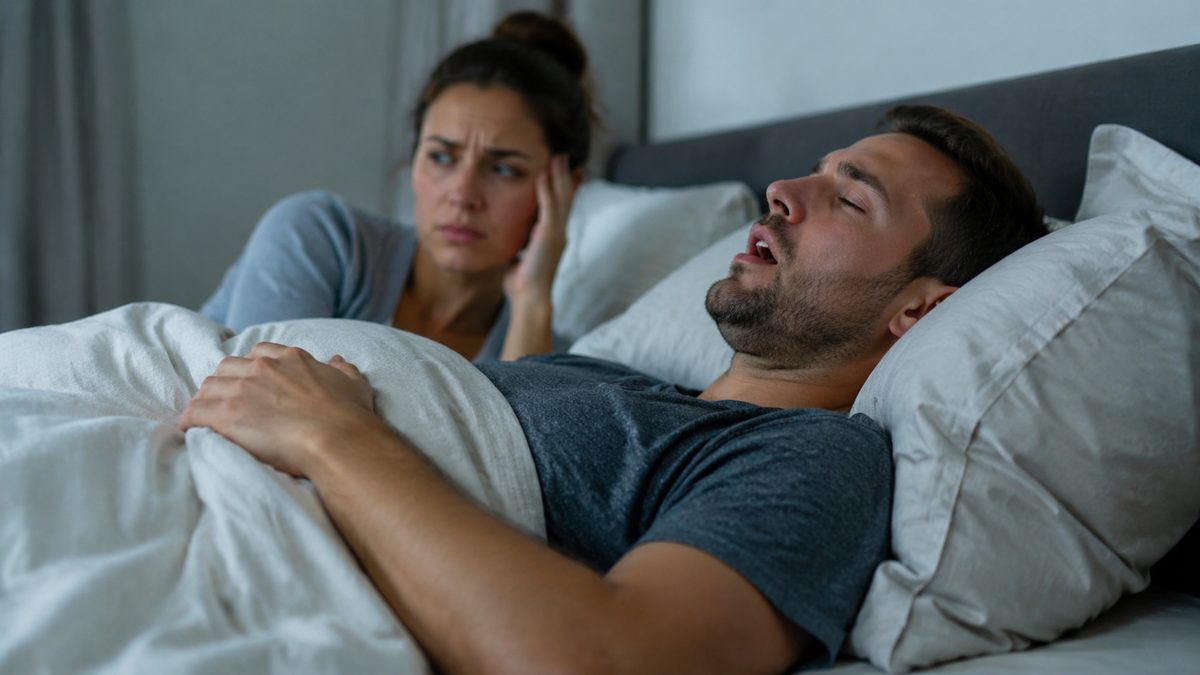
Sleep apnea affects roughly 1 billion people worldwide, according to a 2019 study published in The Lancet Respiratory Medicine. Most of them have no idea. The condition goes undiagnosed for years because the most obvious symptoms happen while you are unconscious.
In my experience, people come in thinking they just snore a little. What I found was that snoring is often the least of their problems. The real damage is happening to their brain, heart, and metabolism every single night.
Here is what sleep apnea actually looks like, and how to know if you have it.
What Are the Most Common Symptoms of Sleep Apnea?
Sleep apnea means your airway collapses or gets blocked repeatedly during sleep. Each time that happens, your brain jolts you awake just enough to restart breathing. You do not remember these episodes. But your body pays for every single one.
The most common symptoms are:
- Loud, chronic snoring
- Gasping or choking sounds during sleep, noticed by a partner
- Waking up with a dry mouth or sore throat
- Morning headaches
- Waking up feeling unrefreshed even after a full night of sleep
- Excessive daytime sleepiness
- Difficulty concentrating or remembering things
- Waking frequently to urinate at night
The American Academy of Sleep Medicine defines clinically significant sleep apnea as five or more breathing interruptions per hour. Severe cases can reach 30 or more per hour. That means your brain is being pulled out of deep sleep dozens of times every night.
What I saw consistently was that people normalize these symptoms. They assume the fatigue is stress, the headaches are dehydration, the brain fog is just aging. Sleep apnea is the actual driver in a large number of those cases.
Can Sleep Apnea Cause Symptoms During the Day?
Yes, and the daytime symptoms are often more disruptive than the nighttime ones.
When your sleep is fragmented by repeated breathing interruptions, you never reach the deep restorative stages of sleep your brain needs. Specifically, you miss out on slow-wave sleep and REM sleep, the two phases responsible for memory consolidation, emotional regulation, and cellular repair.
Daytime symptoms include:
- Falling asleep during low-stimulation activities like reading, watching TV, or sitting in meetings
- Irritability and mood swings
- Depression or anxiety that does not respond well to treatment
- Difficulty focusing or making decisions
- Reduced libido
- High blood pressure that is hard to control with medication
A 2012 study in Sleep Medicine Reviews found that untreated sleep apnea significantly impairs cognitive performance, comparable in some measures to being legally drunk. When I tried explaining this to people, the reaction was always the same. They could not believe something happening while they slept was making them function that poorly while awake.
The cardiovascular risk is also real. The repeated drops in blood oxygen that come with sleep apnea activate the sympathetic nervous system, raise cortisol, and drive inflammation. Research published in the Journal of the American College of Cardiology links untreated sleep apnea to increased risk of hypertension, atrial fibrillation, stroke, and heart failure.
How Do I Know If I Have Sleep Apnea or Just Snoring?
Snoring alone does not mean you have sleep apnea. But snoring combined with other signs is a strong signal.
Simple snoring happens when airflow causes tissue vibration. Sleep apnea happens when airflow stops entirely. The difference matters enormously for your health.
Signs that point toward sleep apnea rather than simple snoring:
- Your partner notices you stop breathing, then gasp or snort
- You snore loudly and consistently, not just when congested or after alcohol
- You wake up feeling exhausted regardless of how long you slept
- You have morning headaches regularly
- You feel sleepy during the day even after what seemed like a full night
- You wake up with a very dry mouth
The gold standard for diagnosis is a polysomnography sleep study, either in a lab or at home with a portable monitor. This measures your breathing, oxygen levels, heart rate, and brain activity while you sleep. It gives a clear picture of how many times per hour your breathing stops and how low your oxygen drops.
I found that home sleep tests have become accurate enough for most straightforward cases. They are far more accessible than they used to be, and most people find them much easier to tolerate than a lab study.
What Are the Symptoms of Sleep Apnea in Women?
Sleep apnea in women is underdiagnosed. The reason is that women often present differently than the classic picture of a heavy-snoring overweight man.
Women with sleep apnea are more likely to report:
- Insomnia or difficulty staying asleep
- Fatigue and low energy rather than obvious daytime sleepiness
- Depression, anxiety, or mood disturbances
- Headaches, particularly in the morning
- Restless legs or frequent nighttime waking
- Brain fog and memory problems
A 2019 study in the European Respiratory Journal found that women with sleep apnea were significantly more likely to be misdiagnosed with depression, insomnia, or chronic fatigue syndrome before the sleep apnea was identified.
Hormonal changes make this worse. Menopause reduces progesterone, which normally helps keep the upper airway muscles toned. Post-menopausal women have two to three times the rate of sleep apnea compared to pre-menopausal women, according to research in Sleep journal.
What I saw was that women often waited years longer than men to get a diagnosis, partly because their symptoms looked like other conditions, and partly because sleep apnea was not on the radar of the clinicians they saw first.
Can Children Show Symptoms of Sleep Apnea?
Children can and do develop sleep apnea. The most common cause in kids is enlarged tonsils or adenoids blocking the airway.
Symptoms in children look different from adults. Children rarely report feeling sleepy. Instead, sleep apnea in kids often shows up as:
- Loud snoring or noisy breathing during sleep
- Mouth breathing, especially at night
- Restless sleep, frequent position changes, or sleeping in unusual positions like with the neck extended
- Bedwetting in children who were previously dry at night
- Behavioral problems, hyperactivity, or difficulty paying attention at school
- Poor growth or weight gain
- Waking up with headaches
The behavioral symptoms are the ones that get missed most often. A child who is hyperactive, impulsive, or struggling to focus at school is frequently assessed for ADHD. Research published in Pediatrics found that a significant proportion of children diagnosed with ADHD actually have sleep-disordered breathing as the primary driver of their symptoms. Treating the sleep apnea resolved the behavioral issues in many of those cases.
In my experience, parents are often told their child just snores and it is not a concern. Snoring in children is not normal. It warrants investigation.
What Are the Symptoms of Sleep Apnea That People Miss?
Beyond the obvious ones, there are several symptoms that rarely get connected to sleep apnea.
Nocturia, waking up to urinate multiple times per night, is one of them. When breathing stops, pressure changes in the chest trigger the release of atrial natriuretic peptide, a hormone that signals the kidneys to produce more urine. Many people are treated for prostate issues or bladder problems when sleep apnea is the actual cause.
Teeth grinding, or bruxism, is another. The jaw clenches as the body tries to reopen the airway. A dentist noticing wear on your teeth may be the first person to flag a sleep breathing problem.
Acid reflux that worsens at night is also linked. The pressure changes from obstructed breathing pull stomach acid upward. People treat the reflux for years without addressing the underlying cause.
High blood pressure that does not respond well to medication is a major one. The American Heart Association recognizes sleep apnea as a secondary cause of hypertension. If blood pressure is hard to control, sleep apnea should be ruled out.
When Should I See a Doctor About Sleep Apnea Symptoms?
See a doctor if you have any of the following:
- A partner tells you that you stop breathing during sleep
- You wake up gasping or choking
- You feel exhausted every morning regardless of sleep duration
- You fall asleep involuntarily during the day
- You have high blood pressure that is difficult to manage
- You wake with headaches most mornings
- You have two or more of the daytime symptoms listed above
Do not wait for all the symptoms to line up perfectly. Sleep apnea is a spectrum. Mild cases still carry health risks, and the condition tends to worsen over time without intervention.
A GP can refer you for a sleep study. In many countries, home sleep testing is now available without a specialist referral. The test is straightforward and the results are clear.
FAQ
Can you have sleep apnea without snoring?
Yes. Central sleep apnea, where the brain fails to send the correct signals to breathing muscles, often occurs without snoring. Some people with obstructive sleep apnea also do not snore loudly. Absence of snoring does not rule out the condition.
Does sleep apnea go away on its own?
In most adults, no. Weight loss can reduce severity significantly in cases where excess weight is a contributing factor. In children with enlarged tonsils, removing the tonsils often resolves the condition. For most adults, ongoing management is needed.
Is sleep apnea dangerous if left untreated?
The research is consistent here. Untreated sleep apnea raises the risk of hypertension, heart disease, stroke, type 2 diabetes, and depression. A 2008 study in Sleep found that severe untreated sleep apnea was associated with a three-fold increase in all-cause mortality compared to people without the condition.
What are the symptoms of sleep apnea in women specifically?
Women more often report fatigue, insomnia, mood changes, and headaches rather than the classic loud snoring and gasping. This leads to frequent misdiagnosis. If you are a woman with persistent fatigue, morning headaches, or mood issues that are not responding to treatment, sleep apnea is worth investigating.
Can anxiety be a symptom of sleep apnea?
Yes. Chronic sleep fragmentation elevates cortisol and disrupts the regulation of the amygdala, the brain region that processes threat and fear. This produces anxiety that can look identical to a primary anxiety disorder. Treating the sleep apnea often reduces anxiety significantly.
How is sleep apnea diagnosed?
Through a sleep study that measures breathing events, oxygen saturation, heart rate, and sleep stages. This can be done in a sleep lab or at home with a portable device. Your doctor will review the results and calculate your apnea-hypopnea index, the number of breathing interruptions per hour.
Understanding what are sleep apnea symptoms is the first step. The second step is acting on what you find. The condition is treatable, and the difference in how people feel after treatment is significant.