
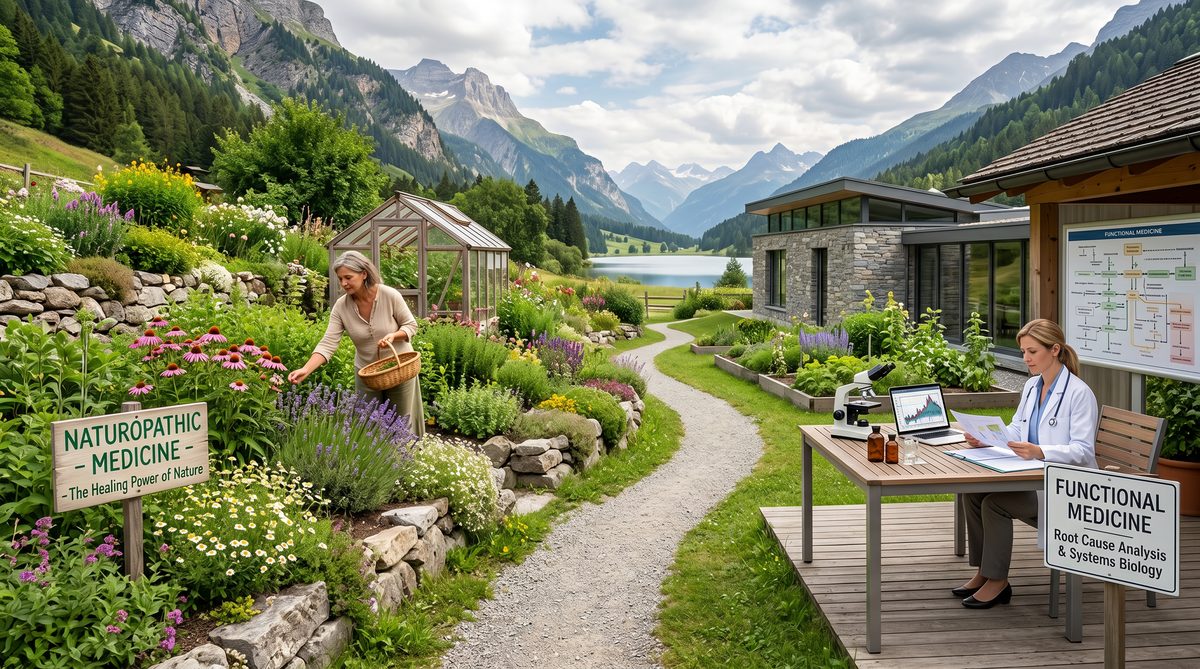
People use these terms like they mean the same thing. They don’t. A naturopath and a functional medicine doctor come from different training backgrounds, use different tools, and think about the body in different ways. Knowing the difference helps you pick the right person for your health problem.
What Is a Naturopath?
A naturopath is trained in natural medicine. The core idea is that the body has an ability to heal itself when you remove what’s blocking it and give it what it needs. Naturopaths use nutrition, herbal medicine, homeopathy, lifestyle changes, and sometimes physical therapies.
In Australia, naturopaths complete a four-year bachelor degree or advanced diploma. They study anatomy, physiology, pathology, nutrition, and herbal medicine. They are not medical doctors and cannot prescribe pharmaceutical drugs.
In my experience, naturopaths spend more time with patients than most GPs do. A first consult often runs 60 to 90 minutes. They ask about sleep, stress, digestion, family history, and emotional health. They look at the whole picture.
What I found was that naturopaths are strong at identifying patterns. They connect dots between symptoms that seem unrelated, like fatigue, bloating, and skin problems, and trace them back to a root cause like gut dysbiosis or adrenal stress.
What Is Functional Medicine?
Functional medicine is a framework, not a profession. It is a way of practising medicine that focuses on root causes rather than symptom management. Most functional medicine practitioners are medical doctors, nurses, or allied health professionals who have done additional training in this approach.
The Institute for Functional Medicine (IFM) in the US is the main certifying body. Their training teaches practitioners to use advanced lab testing, detailed patient history, and systems biology to understand why someone is sick, not just what they have.
Functional medicine doctors can order standard and specialised blood tests, prescribe medications when needed, and refer to specialists. They sit inside the conventional medical system but think outside it.
When I tried looking at both approaches side by side, the clearest difference was this. Naturopathy is a profession with its own philosophy and toolkit. Functional medicine is a clinical methodology that any trained health professional can apply.
What Is the Main Difference Between a Naturopath and a Functional Medicine Doctor?
The main difference is training and scope of practice.
- Qualifications — A functional medicine doctor holds a medical degree first, then adds functional medicine training. A naturopath holds a naturopathy degree and is not a medical doctor.
- Prescribing rights — Functional medicine doctors can prescribe pharmaceutical drugs. Naturopaths cannot.
- Lab access — Functional medicine doctors can order a wider range of diagnostic tests through Medicare or private labs. Naturopaths can order some functional tests privately but have more limited access.
- Philosophy — Naturopathy has a defined philosophy built around vitalism and natural healing. Functional medicine is a systems-based clinical model that does not require a specific philosophical stance.
Both spend more time with patients than a standard GP visit. Both look for root causes. Both use nutrition and lifestyle as core tools. The overlap is real, but the differences matter depending on what you need.
Can a Naturopath Practice Functional Medicine?
Yes. A naturopath can train in functional medicine and apply its principles. Many do. The IFM and similar organisations offer training to a range of health professionals, including naturopaths, nutritionists, and nurses.
What this means practically is that a naturopath with functional medicine training brings both a natural medicine toolkit and a systems-based diagnostic approach. They may order organic acid tests, comprehensive stool analysis, DUTCH hormone panels, and other functional labs that a standard GP would not use.
In my experience, naturopaths who add functional medicine training become sharper at interpreting complex cases. They already think in root causes. The functional medicine framework gives them more precise testing to confirm what they suspect clinically.
The limitation remains the same. They still cannot prescribe pharmaceutical drugs. If your case needs medication alongside natural therapies, you need a medical doctor in the picture.
Which Is Better for Chronic Illness — Naturopathy or Functional Medicine?
For most chronic conditions, both outperform standard care because both spend time finding the cause. Standard medicine is built for acute problems. Chronic illness needs a different model.
Research published in the Journal of Alternative and Complementary Medicine found that naturopathic care for cardiovascular risk factors produced significant improvements in blood pressure, waist circumference, and metabolic markers compared to usual care. A 2019 study in PLOS ONE showed functional medicine patients reported better quality of life scores than those receiving conventional primary care for the same conditions.
Here is how to think about it practically.
- If your condition is complex, involves multiple systems, and you want someone who can also prescribe or refer within the medical system, a functional medicine doctor is the stronger choice.
- If your condition responds well to natural therapies, nutrition, and herbal medicine, and you want a practitioner deeply trained in those tools, a naturopath is the right fit.
- For many people, the best outcome comes from working with both. A functional medicine doctor manages the medical side and a naturopath supports the natural therapy side.
What I saw was that people with autoimmune conditions, hormonal disorders, gut problems, and chronic fatigue got the best results when they had a team, not just one practitioner.
Are Naturopaths Considered Medical Doctors?
No. Naturopaths are not medical doctors. In Australia, the title “doctor” is legally protected. A naturopath cannot call themselves a doctor unless they hold a medical degree registered with AHPRA.
Some naturopaths hold a doctorate in naturopathy from overseas institutions, particularly in the US where naturopathic doctors (NDs) have a different scope of practice and can prescribe in some states. In Australia, that title does not carry the same legal weight or prescribing rights.
This is not a criticism of naturopaths. It is a factual distinction that matters when you are deciding who to see for a serious health problem. A naturopath is a skilled allied health professional. They are not a substitute for a medical doctor when you need one.
What Conditions Do Functional Medicine and Naturopathy Both Treat?
Both approaches work well for conditions where lifestyle, nutrition, gut health, and hormones play a central role. These include:
- Irritable bowel syndrome and inflammatory bowel conditions
- Thyroid disorders including Hashimoto’s and subclinical hypothyroidism
- Type 2 diabetes and insulin resistance
- Polycystic ovarian syndrome (PCOS)
- Chronic fatigue and fibromyalgia
- Anxiety and depression with a physiological component
- Autoimmune conditions
- Hormonal imbalances across all life stages
- Skin conditions like eczema, psoriasis, and acne
- Recurrent infections and immune dysregulation
The difference between naturopath and functional medicine approaches to these conditions is mostly in the tools used. A functional medicine doctor might use pharmaceutical-grade interventions alongside nutrition. A naturopath uses herbal medicine, nutritional supplements, and dietary protocols as the primary tools.
Is Functional Medicine or Naturopathy Covered by Insurance?
In Australia, naturopathy is covered by many private health insurance extras policies. The rebate varies by fund and level of cover. You need to check your specific policy. Medicare does not cover naturopathy.
Functional medicine is trickier. If your functional medicine practitioner is a GP or specialist, their consultations may attract a Medicare rebate. The specialised functional testing they order often does not. Tests like comprehensive stool analysis, DUTCH hormone panels, and organic acid testing are not Medicare-funded and can cost several hundred dollars out of pocket.
Private health insurance generally does not cover functional medicine testing either. This is one of the real costs of both approaches. The upfront investment is higher than a bulk-billed GP visit, but for people with chronic conditions who have cycled through the standard system without answers, the cost-benefit calculation often shifts.
What I found was that people who committed to one thorough investigation with a naturopath or functional medicine doctor often spent less over 12 months than they had been spending on repeat GP visits, specialist referrals, and medications that managed symptoms without fixing the problem.
How Do You Choose Between a Naturopath and a Functional Medicine Doctor?
Ask yourself three questions.
- Do I need prescribing access? If yes, you need a functional medicine doctor or a GP who thinks functionally.
- Is my condition primarily driven by lifestyle, gut health, or hormones? If yes, a naturopath with strong clinical skills can get you a long way.
- How complex is my case? Multiple diagnoses, failed treatments, and unclear causes point toward functional medicine. A single system problem with a clear lifestyle component points toward naturopathy.
The honest answer is that the quality of the individual practitioner matters more than the label. A skilled naturopath with 15 years of clinical experience will outperform a functional medicine doctor who completed a weekend course. Check their training, their clinical focus, and whether they have worked with people who have your specific condition.
FAQ
Can a naturopath order blood tests?
In Australia, naturopaths can order some blood tests through private labs without a doctor’s referral. They cannot order tests through Medicare. The cost comes out of pocket. They can also order functional tests like stool analysis and hormone panels through specialised labs.
Is functional medicine evidence-based?
Yes. Functional medicine uses evidence-based interventions including nutrition, lifestyle medicine, and targeted supplementation. The research base is growing. A 2017 study in the Journal of the American Medical Association found functional medicine patients had significantly better patient-reported outcomes than those in a primary care setting for several chronic conditions.
How long does treatment take with a naturopath or functional medicine doctor?
Chronic conditions take time regardless of the approach. Most people see meaningful change in 3 to 6 months with consistent treatment. Complex cases can take 12 months or more. Anyone promising fast results for a long-standing chronic condition is overselling.
Can I see a naturopath and a GP at the same time?
Yes, and this is often the best setup. Your GP manages acute care, medications, and standard testing. Your naturopath manages the root cause work, nutrition, and natural therapies. Tell both practitioners what the other is doing so they can work together rather than against each other.
What should I look for in a naturopath?
Look for a four-year degree qualification, registration with a professional association like the Australian Natural Therapists Association (ANTA) or Naturopaths and Herbalists Association of Australia (NHAA), and clinical experience with your specific condition. Ask how many patients with your condition they have treated and what their typical outcomes look like.
The Bottom Line
Naturopathy is a profession. Functional medicine is a methodology. Both look for root causes. Both use nutrition and lifestyle as core tools. The difference between a naturopath and functional medicine comes down to training, scope, and the tools available to each practitioner.
For most people with chronic health problems, either approach will give you more time, more investigation, and more personalised care than the standard medical system. The right choice depends on how complex your case is, whether you need prescribing access, and the quality of the individual practitioner you find.
Start with a clear picture of what you need. Then find the practitioner whose training and experience matches that need.