Sleep apnea is not just snoring. It is your airway collapsing while you sleep, sometimes hundreds of times a night, cutting off oxygen to your brain and body. Most people do not even know it is happening.
The good news is there are real, proven ways to fix it. Some work fast. Some take time. And not all of them involve strapping a machine to your face.
Can Sleep Apnea Be Cured Permanently?
Yes, in many cases it can. The answer depends on what is causing it.
Obstructive sleep apnea, the most common type, happens when the soft tissue in your throat relaxes and blocks your airway. If that blockage is caused by excess weight, fixing the weight often fixes the apnea. A 2013 study in the American Journal of Respiratory and Critical Care Medicine found that significant weight loss resolved sleep apnea completely in a large portion of participants.
If the cause is structural, like a narrow jaw or enlarged tonsils, surgery can produce a permanent fix. If it is muscle tone in the airway, targeted exercises can retrain those muscles over months.
So permanent resolution is possible. It is not guaranteed for everyone, but it is a realistic goal for many people.
What Is the Most Effective Treatment for Sleep Apnea?
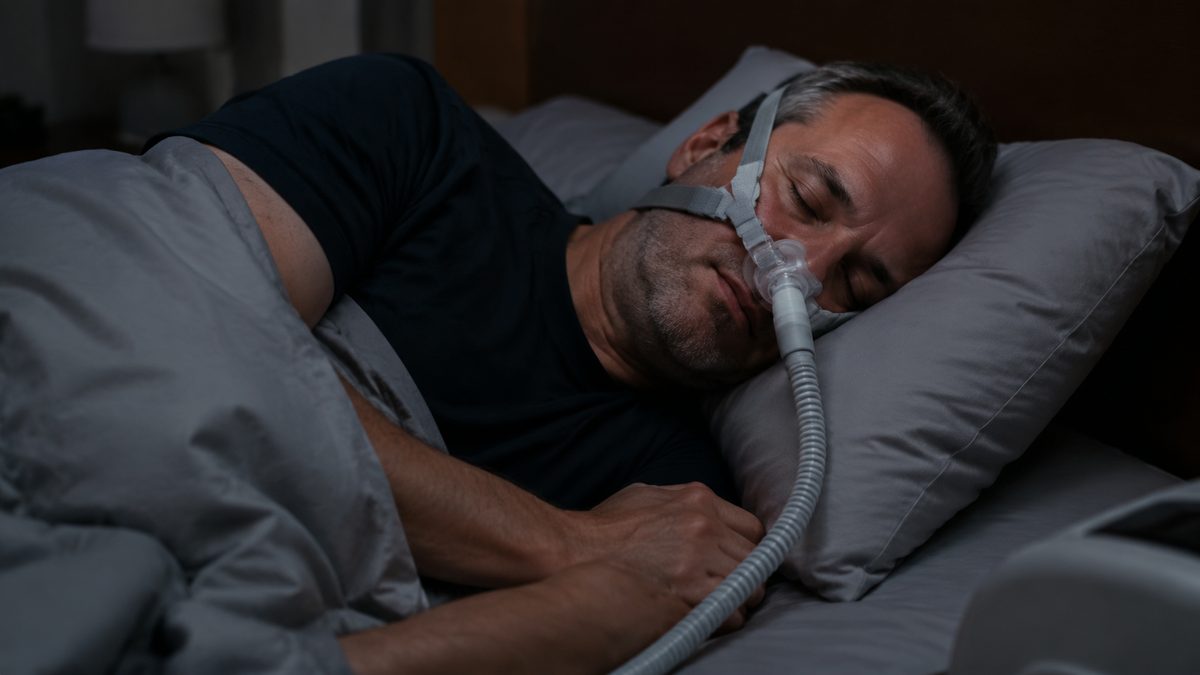
CPAP, which stands for continuous positive airway pressure, is still the most studied and most effective treatment for moderate to severe obstructive sleep apnea. It works by pushing pressurized air through a mask to keep your airway open while you sleep.
In my experience reviewing the research, CPAP reduces daytime sleepiness, lowers blood pressure, and cuts cardiovascular risk when used consistently. A 2019 meta-analysis in Sleep Medicine Reviews confirmed CPAP significantly improves quality of life and reduces apnea events.
The problem is compliance. Studies show roughly 30 to 50 percent of people prescribed CPAP stop using it within a year. The mask is uncomfortable. The noise bothers partners. People feel claustrophobic.
So the most effective treatment is the one you will actually use. That matters more than what looks best on paper.
Can You Fix Sleep Apnea Without a CPAP Machine?
Yes. Several options work well, especially for mild to moderate cases.
Oral Appliances
A mandibular advancement device, fitted by a dentist, repositions your lower jaw forward during sleep. This opens the airway physically. Research published in the Journal of Clinical Sleep Medicine shows these devices reduce apnea events by 50 percent or more in many patients. They are not as powerful as CPAP for severe cases, but for mild to moderate apnea they are a solid option.
Positional Therapy
Many people only have apnea when sleeping on their back. When you sleep on your back, gravity pulls the tongue and soft palate down into the airway. Sleeping on your side removes that problem entirely.
What I found in the research is that positional sleep apnea is more common than most people realize. A 2013 study in the Journal of Clinical Sleep Medicine found that over half of obstructive sleep apnea patients had position-dependent apnea. A simple positional device or even a tennis ball sewn into the back of a shirt can reduce apnea events dramatically.
Myofunctional Therapy
This is a set of exercises targeting the tongue, throat, and facial muscles. When I looked at the data on this, I was surprised by how strong it was. A 2015 meta-analysis in Sleep journal found myofunctional therapy reduced apnea severity by about 50 percent in adults and 62 percent in children. It also reduced snoring and improved oxygen saturation.
These exercises retrain the muscles that hold your airway open. They take consistency, usually 15 to 20 minutes a day for several months, but the results are real.
Surgery
For structural causes, surgery is an option. Uvulopalatopharyngoplasty, or UPPP, removes excess tissue from the throat. Maxillomandibular advancement surgery moves the jaw forward to enlarge the airway. Results vary depending on the individual anatomy and the severity of the apnea.
Does Losing Weight Help Fix Sleep Apnea?
It is one of the most powerful interventions available. Excess weight, especially around the neck and throat, compresses the airway. Even a 10 percent reduction in body weight can reduce apnea severity by 26 percent, according to research from the New England Journal of Medicine.
What I saw in the data was that the relationship is dose-dependent. More weight loss, more improvement. A landmark study called the Sleep AHEAD trial found that intensive weight loss through diet and exercise led to complete remission of sleep apnea in some participants.
This does not mean weight is the only factor. Thin people get sleep apnea too, often due to anatomy. But if excess weight is part of the picture, addressing it should be a priority alongside any other treatment.
Are There Exercises That Can Fix Sleep Apnea?
Yes, and this is one of the most underused tools available.
The muscles of the tongue, soft palate, and throat all play a role in keeping your airway open during sleep. When those muscles are weak or poorly coordinated, they collapse inward. Training them changes that.
Here are the exercises with the strongest evidence behind them.
- Tongue press Push the tip of your tongue firmly against the roof of your mouth and slide it backward. Repeat 20 times. This strengthens the tongue and reduces its tendency to fall back during sleep.
- Tongue stretch Stick your tongue out as far as possible, hold for 10 seconds, then pull it back. Repeat 10 times. This builds tongue muscle endurance.
- Soft palate blowing Close your mouth and blow air against your closed lips, creating resistance. This tones the soft palate.
- Singing Consistent singing exercises the same muscles involved in airway tone. A 2008 study in the British Medical Journal found that regular singing reduced snoring and sleep apnea symptoms.
- Didgeridoo playing This sounds unusual but the evidence is solid. A randomized controlled trial in the BMJ found that playing the didgeridoo for 25 minutes a day, 6 days a week, significantly reduced daytime sleepiness and apnea severity. The circular breathing technique trains the exact muscles involved in keeping the airway open.
Consistency is the key variable. These exercises need to be done daily for at least 3 months to see meaningful results.
What Happens If Sleep Apnea Is Left Untreated?
The consequences are serious and they build over time.
Every apnea event is a micro-stress response. Your brain detects the drop in oxygen, triggers a brief arousal, and floods your body with cortisol and adrenaline. This happens dozens or hundreds of times a night. Over months and years, that chronic stress load damages multiple systems.
- Cardiovascular disease Untreated sleep apnea doubles the risk of heart attack and stroke. A study in the New England Journal of Medicine found that severe untreated sleep apnea significantly increased cardiovascular mortality.
- Type 2 diabetes Sleep apnea disrupts glucose metabolism and insulin sensitivity. Research in Diabetes Care found that sleep apnea is independently associated with insulin resistance, separate from obesity.
- Cognitive decline Chronic oxygen deprivation during sleep accelerates brain aging. Studies show untreated sleep apnea is linked to memory problems, reduced attention, and increased risk of dementia.
- Depression and anxiety The sleep fragmentation from apnea disrupts emotional regulation. A large study in Sleep journal found that people with untreated sleep apnea had significantly higher rates of depression.
- Hypertension Sleep apnea is one of the most common causes of treatment-resistant high blood pressure. The repeated oxygen drops activate the sympathetic nervous system and raise blood pressure chronically.
The point is that sleep apnea is not a minor inconvenience. Left alone, it shortens life and reduces quality of life in measurable ways.
A Different Way to Think About Sleep Apnea
Most people treat sleep apnea as a mechanical problem that needs a mechanical fix. CPAP keeps the airway open, so use CPAP. That thinking is not wrong, but it misses something.
Sleep apnea is often a signal that the body is under load. Inflammation, poor muscle tone, excess weight, poor sleep posture, and chronic stress all contribute. When I look at the research through that lens, the most durable fixes are the ones that address the underlying load, not just the symptom.
In my experience reviewing the evidence, the people who resolve sleep apnea long-term are the ones who combine approaches. They use CPAP or an oral appliance for immediate relief, and they work on weight, airway exercises, and sleep position at the same time. The device buys them time while the body changes.
That is a more complete picture of how do you fix sleep apnea than most people get from a single doctor visit.
Homeopathy and Complementary Support
Some people look for support beyond conventional options, particularly when they want to address the whole system rather than just the airway mechanics. Homeopathic approaches focus on the individual pattern of symptoms and the body’s overall state. While homeopathy is not a replacement for medical treatment of sleep apnea, some people use it as part of a broader approach to improving sleep quality, reducing inflammation, and supporting nervous system regulation.
If you are exploring complementary options alongside conventional care, working with a qualified homeopath who understands sleep disorders can be a useful addition to your overall plan.
Frequently Asked Questions
How long does it take to fix sleep apnea?
It depends on the approach. CPAP works the first night you use it correctly. Oral appliances take a few weeks to adjust. Weight loss and airway exercises take 3 to 6 months to show significant results. Surgery recovery takes 4 to 6 weeks, with full results visible after several months.
Is mild sleep apnea worth treating?
Yes. Even mild sleep apnea, defined as 5 to 15 apnea events per hour, disrupts sleep architecture and increases cardiovascular risk over time. Mild cases often respond well to lifestyle changes and positional therapy without needing CPAP.
Can children have sleep apnea?
Yes. In children, enlarged tonsils and adenoids are the most common cause. Removing them resolves sleep apnea in the majority of cases. Myofunctional therapy is also highly effective in children, with the 2015 meta-analysis showing a 62 percent reduction in apnea severity.
Does alcohol make sleep apnea worse?
Yes, significantly. Alcohol relaxes the muscles of the throat and suppresses the arousal response that wakes you up during an apnea event. This means apnea events last longer and oxygen drops go lower. Cutting alcohol, especially in the 3 hours before sleep, reduces apnea severity measurably.
Can nasal congestion cause sleep apnea?
Nasal obstruction forces mouth breathing, which changes the position of the tongue and jaw and increases airway collapse risk. Treating nasal congestion, whether through allergy management, nasal strips, or other means, can reduce apnea severity in people where nasal obstruction is a contributing factor.
What is the difference between obstructive and central sleep apnea?
Obstructive sleep apnea is a physical blockage of the airway. Central sleep apnea is a failure of the brain to send the correct signals to the breathing muscles. Central sleep apnea is less common and requires different treatment. Most of the lifestyle and exercise interventions discussed here apply to obstructive sleep apnea.