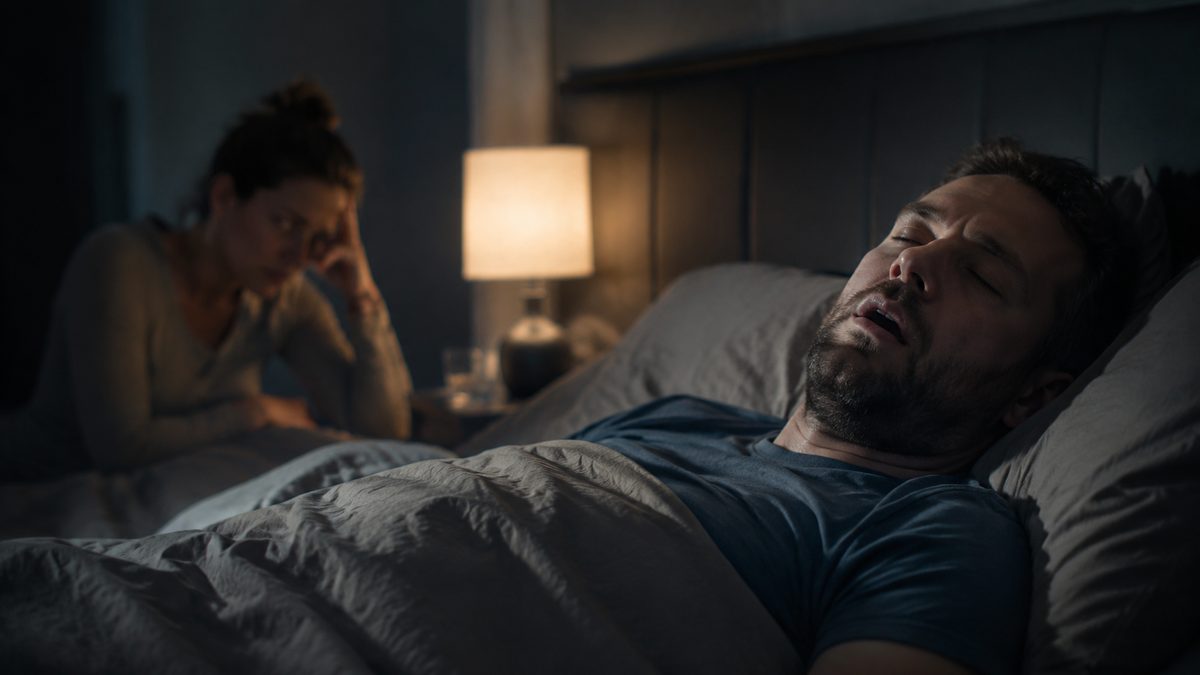
Most people think sleep apnea just means loud snoring and feeling tired. It is much more than that. Untreated sleep apnea puts serious stress on your heart, brain, blood sugar, and body weight every single night. And most people have no idea it is happening.
Here is what the research actually shows about what are the dangers of sleep apnea, and why ignoring it is one of the worst things you can do for your long-term health.
Can Sleep Apnea Cause Heart Problems?
Yes. This is one of the most well-documented dangers.
Every time you stop breathing during sleep, your oxygen levels drop. Your body reads this as an emergency. It floods your system with stress hormones like cortisol and adrenaline. Your heart rate spikes. Your blood pressure jumps. This can happen 30, 60, even 100 times per night.
A study published in the Journal of the American College of Cardiology found that people with severe sleep apnea have a 58% higher risk of developing heart failure. The American Heart Association links untreated sleep apnea directly to high blood pressure, irregular heart rhythms like atrial fibrillation, coronary artery disease, and stroke.
In my experience looking at the research, what stands out is that the heart never gets a break. Even during sleep, which is supposed to be recovery time, the cardiovascular system is under constant attack. Night after night, year after year, that damage adds up.
Can Sleep Apnea Be Life-Threatening?
Yes, it can.
The most direct risk is sudden cardiac death during sleep. A Mayo Clinic study found that people with sleep apnea were significantly more likely to die from cardiac causes between midnight and 6am, which is the opposite pattern seen in the general population.
Beyond sudden death, the compounding risks are serious. Untreated sleep apnea raises your risk of stroke by up to three times according to research from the American Journal of Respiratory and Critical Care Medicine. It raises your risk of a fatal car accident by up to seven times because of daytime drowsiness, based on data from the National Highway Traffic Safety Administration.
People with severe untreated sleep apnea also have a higher all-cause mortality rate. A landmark study following over 6,000 adults found that men aged 40 to 70 with severe sleep apnea had nearly three times the risk of dying from any cause compared to those without it.
This is not a condition to manage later. The risks are real and they compound over time.
What Happens to Your Brain With Untreated Sleep Apnea?
The brain takes a serious hit.
Oxygen is the brain’s fuel. When sleep apnea cuts off oxygen repeatedly through the night, brain tissue gets damaged. Researchers at UCLA used MRI imaging and found that people with sleep apnea had significant loss of grey matter in areas controlling memory, attention, and decision-making.
What I found striking in the research is that the hippocampus, the part of the brain most responsible for forming new memories, shrinks in people with chronic sleep apnea. This is the same region affected early in Alzheimer’s disease.
A 2023 study in Nature Communications found that sleep apnea accelerates the buildup of amyloid plaques in the brain, which are a key marker of Alzheimer’s. People with untreated sleep apnea showed cognitive decline at a faster rate than those without it.
Short term, you get brain fog, poor concentration, and mood problems. Long term, you are looking at a measurably higher risk of dementia. Sleep is when the brain clears waste products through the glymphatic system. Disrupt that process every night and the waste builds up.
Does Sleep Apnea Affect Blood Sugar and Diabetes?
Strongly, yes.
Sleep apnea and type 2 diabetes are deeply connected. Research published in Diabetes Care found that over 70% of people with type 2 diabetes also have sleep apnea. That overlap is not a coincidence.
Here is the mechanism. When oxygen drops during an apnea event, the body releases cortisol and adrenaline. Both of these hormones raise blood glucose. They also reduce insulin sensitivity. Do this dozens of times a night and you are essentially running a metabolic stress response while you sleep.
What I saw in the data was that treating sleep apnea with CPAP therapy improved insulin sensitivity in diabetic patients, even without changes to diet or exercise. That tells you the sleep disruption itself is driving part of the blood sugar problem.
For people who are pre-diabetic or already managing blood sugar, untreated sleep apnea makes the job significantly harder. It is like trying to fix a leaking pipe while someone keeps turning the tap back on.
Can Sleep Apnea Cause Weight Gain?
Yes, and this creates a difficult cycle.
Sleep apnea disrupts two key hormones that control hunger. Ghrelin, which makes you hungry, goes up. Leptin, which tells you that you are full, goes down. Research from Stanford University found that people with sleep disorders had 14.9% more ghrelin and 15.5% less leptin than normal sleepers.
The result is that you wake up hungrier, crave high-calorie foods, and feel less satisfied after eating. Your body is also running on stress hormones that promote fat storage, particularly around the abdomen.
When I tried to understand why so many people with sleep apnea struggle to lose weight despite effort, this hormonal disruption explains a lot of it. The body is fighting against you at a chemical level.
The frustrating part is that excess weight, especially around the neck and throat, makes sleep apnea worse. So the apnea causes weight gain, and the weight gain worsens the apnea. Breaking that cycle requires addressing both sides at once.
How Does Sleep Apnea Affect Daily Life?
The daily impact goes well beyond feeling tired.
Mental health takes a real hit. Studies show people with untreated sleep apnea are significantly more likely to experience depression and anxiety. A large study in the journal Sleep Medicine found that sleep apnea patients had more than double the rate of depression compared to the general population.
Work performance drops. Reaction time slows. Decision-making gets worse. Memory recall suffers. Research from Harvard Medical School found that sleep-deprived people consistently underestimate how impaired they actually are, which makes the problem worse because they do not compensate for it.
Relationships suffer. Loud snoring disrupts partners. Mood changes from chronic sleep deprivation create friction. Many couples end up sleeping separately, which has its own downstream effects on relationship quality.
Driving becomes dangerous. The National Sleep Foundation reports that drowsy driving causes over 100,000 crashes per year in the US alone. People with untreated sleep apnea are among the highest-risk drivers on the road.
Sexual health is affected too. Sleep apnea is linked to erectile dysfunction in men and reduced libido in both sexes. The mechanism involves low testosterone, which drops when sleep quality is poor, and reduced blood flow from cardiovascular stress.
FAQ
How do I know if I have sleep apnea?
Common signs are loud snoring, waking up gasping or choking, morning headaches, dry mouth on waking, and feeling exhausted no matter how long you sleep. A bed partner often notices the breathing pauses before you do. A sleep study, either in a clinic or at home, is the only way to confirm it.
Is sleep apnea only a problem for overweight people?
No. While excess weight is a risk factor, sleep apnea also affects people who are lean. Jaw structure, tongue size, nasal anatomy, and genetics all play a role. Children can have it too, usually from enlarged tonsils.
Can you die in your sleep from sleep apnea?
Yes, though it is more common through the secondary effects like cardiac arrhythmia and sudden cardiac death. The Mayo Clinic data on midnight-to-6am cardiac deaths in sleep apnea patients is clear on this.
Does treating sleep apnea reverse the damage?
Some damage reverses with treatment. Blood pressure often improves. Insulin sensitivity can improve. Cognitive function can partially recover. The earlier you treat it, the better the outcome. Some structural changes, like grey matter loss in the brain, may not fully reverse.
Are there natural approaches to support sleep apnea?
Lifestyle changes like weight loss, sleeping on your side, reducing alcohol, and clearing nasal congestion can reduce severity. Some people explore complementary approaches alongside conventional treatment. If you are looking at holistic options, Homeopathy Plus offers resources on natural health support that may complement your overall care plan.
What is the most effective treatment for sleep apnea?
CPAP therapy is the most studied and most effective treatment for moderate to severe sleep apnea. Oral appliances work for mild to moderate cases. Surgery is an option in specific anatomical cases. Treatment choice depends on severity and individual factors, so work with a sleep specialist.
The Bottom Line
Sleep apnea is not just a snoring problem. It is a systemic health condition that damages your heart, brain, metabolism, and mental health every single night it goes untreated.
The research is consistent. The risks are real. And the good news is that treating it produces measurable improvements across almost every system it affects.
If you suspect you have it, get tested. The cost of ignoring it is far higher than the cost of dealing with it now.