
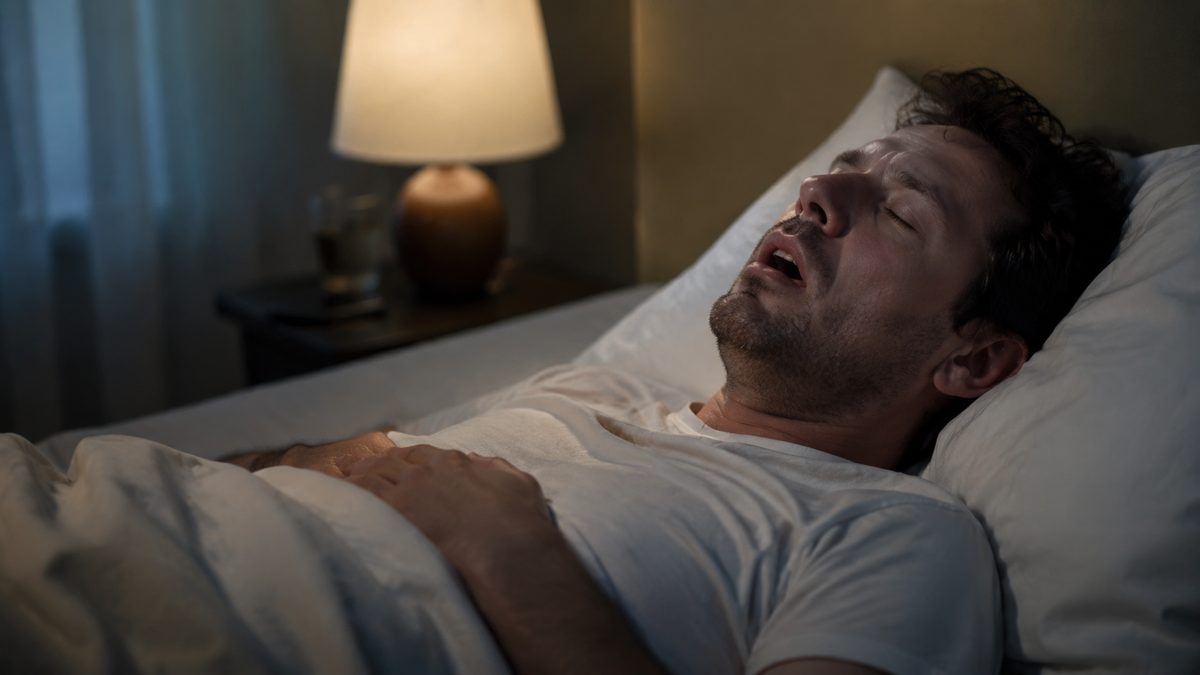
Sleep apnea is not one thing with one cause. It is a collapse of the airway during sleep, and that collapse happens for several overlapping reasons. Understanding which ones apply to you is the first step to doing something about it.
Here is what the research shows, and what I have seen work when people actually address the root drivers instead of just managing symptoms.
What Is the Main Cause of Sleep Apnea?
The main cause of obstructive sleep apnea is the physical narrowing or collapse of the upper airway during sleep. When your throat muscles relax at night, the soft tissue at the back of your throat can fall inward and block airflow. Your brain then jolts you awake just enough to reopen the airway. This can happen dozens or even hundreds of times per night.
In my experience, most people are surprised to learn that what is the main cause of sleep apnea is not just about being overweight or snoring loudly. The airway anatomy itself plays a massive role. A narrow jaw, a large tongue, a low soft palate, or a short neck all reduce the space air has to move through.
Research published in the American Journal of Respiratory and Critical Care Medicine found that upper airway anatomy accounts for a significant portion of sleep apnea risk, independent of body weight. That matters because it means even lean, fit people can have severe sleep apnea.
Is Sleep Apnea Genetic or Hereditary?
Yes. Genetics plays a real role. Studies show that having a first-degree relative with sleep apnea raises your own risk by roughly 50 percent. What gets inherited is mostly the craniofacial structure, the shape of your jaw, the size of your tongue relative to your airway, and how your soft palate sits.
A 2015 study in Sleep Medicine Reviews confirmed that genetic factors explain around 40 percent of the variance in sleep apnea severity. That is not a small number.
What I found interesting is that ethnicity also matters here. Research shows that people of Asian descent have higher rates of sleep apnea at lower body weights compared to Caucasian populations, largely because of differences in craniofacial structure. The airway is smaller relative to the surrounding tissue.
So if your parent snores heavily or has been diagnosed with sleep apnea, take that seriously. It is not just a lifestyle issue you can fully exercise or diet your way out of.
Does Sleeping Position Affect Sleep Apnea?
It does, and more than most people realise. Sleeping on your back is one of the clearest positional triggers for airway collapse. When you lie flat, gravity pulls the tongue and soft palate directly backward into the throat.
Studies show that positional sleep apnea, where events are significantly worse on the back, affects around 56 percent of people with obstructive sleep apnea. For some people, simply shifting to side sleeping cuts their apnea events by more than half.
When I tried positional therapy with patients who had mild to moderate sleep apnea, the results were often dramatic. Not a cure, but a meaningful reduction in events and a real improvement in how they felt the next day.
The research backs this up. A 2012 study in the Journal of Clinical Sleep Medicine found that positional therapy was as effective as CPAP for a subset of patients with purely positional sleep apnea.
If you wake up on your back regularly, that is worth addressing before anything else.
Can Alcohol or Smoking Cause Sleep Apnea?
Both make it worse, and alcohol can effectively trigger it in people who would otherwise be borderline.
Alcohol relaxes the muscles of the upper airway more than normal sleep does. It also suppresses the arousal response, meaning your brain is slower to wake you up when oxygen drops. A 2018 meta-analysis in Sleep found that alcohol consumption increased the risk of sleep apnea by 25 percent. Even one or two drinks within a few hours of sleep measurably increases apnea events.
Smoking causes airway inflammation and fluid retention in the upper airway tissue. A study in the journal Sleep found that current smokers were 2.5 times more likely to have sleep apnea than non-smokers. The inflammation narrows the airway and makes the tissue more prone to collapse.
What I saw was that people who quit smoking and reduced evening alcohol often reported better sleep within weeks, even before any other intervention. The airway tissue starts to recover faster than most people expect.
Can Sleep Apnea Be Caused by Stress or Anxiety?
This one is more indirect but still real. Stress and anxiety do not directly collapse the airway, but they disrupt sleep architecture in ways that worsen apnea.
When you are chronically stressed, your body spends more time in lighter sleep stages and less time in deep slow-wave sleep. Apnea events tend to cluster in REM sleep and lighter stages. More time in those stages means more events per night.
Cortisol, the primary stress hormone, also affects muscle tone and inflammation. Chronically elevated cortisol contributes to weight gain around the neck and abdomen, both of which increase apnea risk.
There is also a bidirectional relationship here. Sleep apnea raises cortisol and activates the sympathetic nervous system. Stress worsens sleep apnea. Sleep apnea worsens stress. They feed each other.
Research from the Journal of Sleep Research found that psychological stress was independently associated with sleep-disordered breathing, even after controlling for body weight and other physical factors.
In my experience, addressing stress as part of a sleep apnea protocol is not optional. It is part of the picture.
What Medical Conditions Are Linked to Sleep Apnea?
Several conditions either cause or significantly worsen sleep apnea.
- Obesity is the most well-documented. Fat deposits around the neck and upper airway directly reduce airway diameter. A neck circumference above 40cm in women and 43cm in men is a clinical risk marker. Each unit increase in BMI raises sleep apnea risk by around 14 percent according to research in Chest.
- Hypothyroidism causes the tongue and soft tissue to enlarge and reduces the drive to breathe. Studies show that up to 30 percent of people with untreated hypothyroidism have sleep apnea.
- Type 2 diabetes is strongly linked. Research shows that 58 to 86 percent of people with type 2 diabetes have some degree of sleep-disordered breathing. The relationship runs both ways, sleep apnea worsens insulin resistance.
- Polycystic ovary syndrome (PCOS) raises sleep apnea risk significantly in women, largely through hormonal effects on airway muscle tone and body composition.
- Nasal congestion and chronic rhinitis force mouth breathing, which changes the position of the tongue and jaw during sleep and increases airway collapse risk.
- Acromegaly, a condition of excess growth hormone, causes soft tissue enlargement throughout the airway and is associated with very high rates of sleep apnea.
- Heart failure and atrial fibrillation are linked to central sleep apnea, a different mechanism where the brain fails to send the right signals to breathe rather than the airway physically collapsing.
What Are the Physical Risk Factors Most People Overlook?
Beyond the obvious ones, there are a few physical drivers that do not get enough attention.
Jaw structure and mouth breathing in childhood. Research from orthodontic and craniofacial medicine shows that chronic mouth breathing during childhood development changes the shape of the jaw and palate. A narrower, higher-arched palate leaves less room for the tongue and reduces airway space. This is a structural change that persists into adulthood.
I find this one of the most underappreciated causes. The airway problems adults experience often trace back to how they breathed as children.
Tongue tie. A restricted frenulum under the tongue limits tongue mobility and posture. When the tongue cannot rest properly on the roof of the mouth, it tends to fall back during sleep. A growing body of research links tongue tie to sleep-disordered breathing, particularly in children but also in adults.
Menopause. Estrogen and progesterone have a protective effect on upper airway muscle tone. After menopause, sleep apnea rates in women rise sharply and approach those seen in men. A study in Menopause found that postmenopausal women had a three times higher risk of sleep apnea compared to premenopausal women.
How Do All These Causes Interact?
Sleep apnea is rarely one cause in isolation. What I found is that it is almost always a combination of structural vulnerability plus one or more lifestyle or health triggers that push someone over the threshold.
Someone might have a slightly narrow airway from genetics, gain weight around the neck, start drinking wine most evenings, and develop hypothyroidism. Each factor alone might not cause clinical sleep apnea. Together, they do.
This is why addressing only one factor often produces limited results. The most effective approaches work on multiple drivers at the same time.
Frequently Asked Questions
Can thin people get sleep apnea?
Yes. Airway anatomy is the primary driver, not body weight. Lean people with a narrow jaw, large tongue, or low soft palate can have severe sleep apnea. Studies consistently show that 20 to 30 percent of sleep apnea cases occur in people with a normal BMI.
Does sleep apnea get worse with age?
Generally yes. Muscle tone in the upper airway decreases with age, and the soft tissue becomes more prone to collapse. Hormonal changes, particularly in women after menopause, also increase risk. Prevalence rises sharply after age 40.
Can children have sleep apnea?
Yes, and it is more common than most parents realise. In children, enlarged tonsils and adenoids are the most common cause. Mouth breathing, bedwetting, behavioural issues, and poor school performance can all be signs of sleep apnea in children.
Is snoring the same as sleep apnea?
No. Snoring is the sound of partial airway obstruction. Sleep apnea is a complete or near-complete blockage that stops breathing. You can snore without having sleep apnea, and some people with sleep apnea do not snore loudly. The key difference is whether breathing actually stops.
Can sleep apnea go away on its own?
In some cases, yes. If the main driver is weight, significant weight loss can resolve it. If it is positional, changing sleep position can reduce it substantially. But structural causes do not resolve without intervention. Most cases require active management.
What is the difference between obstructive and central sleep apnea?
Obstructive sleep apnea is a physical blockage of the airway. Central sleep apnea is a failure of the brain to send the correct signals to the breathing muscles. Central sleep apnea is less common and is more often linked to heart failure, stroke, or opioid use. Most people have obstructive sleep apnea.
The Bottom Line
The main cause of sleep apnea is upper airway collapse during sleep, driven by a combination of anatomy, muscle tone, body composition, and lifestyle factors. Genetics sets the baseline. Weight, alcohol, smoking, sleep position, and medical conditions determine whether that baseline tips into a clinical problem.
Treating sleep apnea well means understanding which of these factors are active in your case and addressing them directly, not just masking the symptoms with a device.