
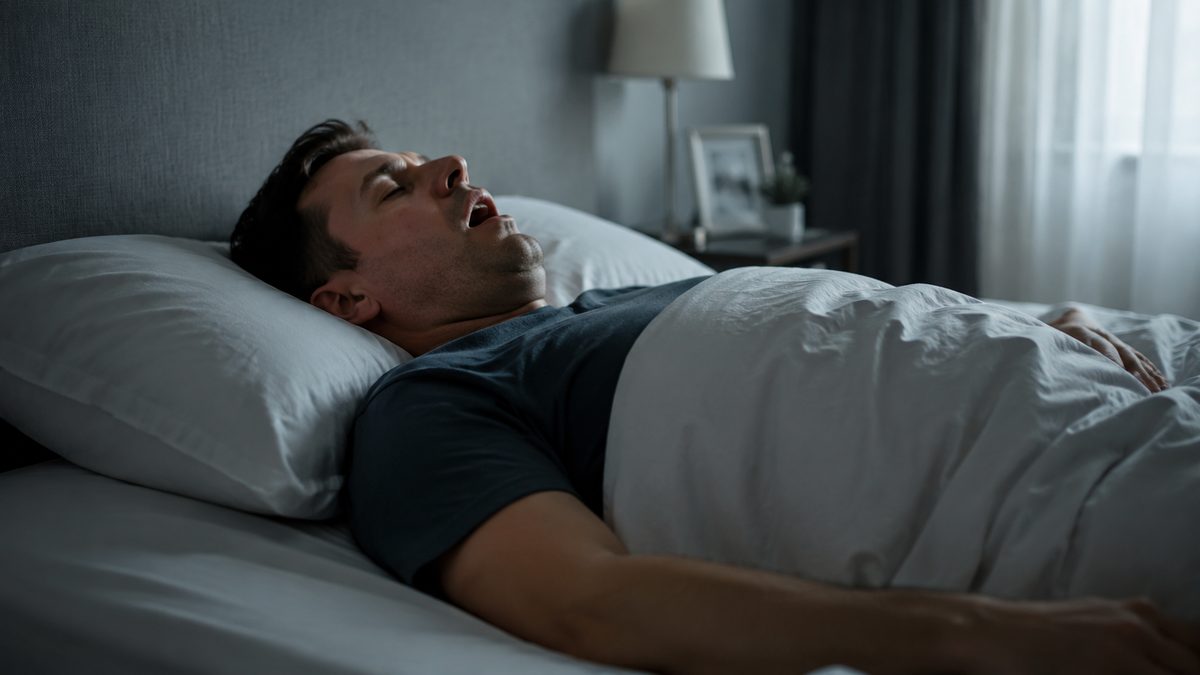
Yes, you can live with untreated sleep apnea. People do it for years. But what the research shows is that your body pays a price every single night, and that price compounds over time in ways most people don’t connect back to their sleep.
The problem is that sleep apnea doesn’t feel urgent. You wake up tired, you push through the day, and you assume that’s just how life is. In my experience, most people with untreated sleep apnea don’t know they have it. Their partner notices the snoring, or they fall asleep at the wheel, and that’s when it becomes real.
So let’s go through what actually happens when sleep apnea goes untreated, because the evidence is clear and it matters.
Can You Live With Untreated Sleep Apnea for Years?
Yes, and many people do. But living with it is not the same as living well. What I found in the research is that the damage from untreated sleep apnea is cumulative. It builds slowly, quietly, and by the time symptoms become obvious, significant harm has already been done.
A study published in the journal Sleep followed over 1,500 adults and found that people with severe untreated sleep apnea had a mortality rate roughly three times higher than those without it over an 18-year period. That’s not a small number.
The reason it goes undetected for so long is that the symptoms look like other things. Fatigue looks like stress. Brain fog looks like aging. Mood problems look like anxiety. People treat the symptoms and never find the root cause.
What Happens to Your Body When Sleep Apnea Goes Untreated?
Every time you stop breathing during sleep, your oxygen levels drop. Your brain detects this and sends an emergency signal to wake you up just enough to breathe again. This can happen 5 times per hour in mild cases, and over 30 times per hour in severe cases.
Each one of those events triggers a stress response. Your body releases cortisol and adrenaline. Your heart rate spikes. Your blood pressure rises. Then it happens again. And again. All night, every night.
Here is what that does to your body over time.
Your Heart Takes the Biggest Hit
The cardiovascular system is where untreated sleep apnea does its most serious damage. The repeated oxygen drops and blood pressure spikes strain the heart and blood vessels in a way that builds up over years.
- People with untreated sleep apnea are 2 to 4 times more likely to develop atrial fibrillation, according to research published in the Journal of the American College of Cardiology.
- Hypertension is directly linked to sleep apnea. The American Heart Association recognizes sleep apnea as a major contributing factor to treatment-resistant high blood pressure.
- A large study in the New England Journal of Medicine found that severe sleep apnea significantly increases the risk of heart attack and stroke, independent of other risk factors like obesity or smoking.
What I saw in the data was that the heart risk is not just about severity. Even moderate sleep apnea, left untreated for years, produces measurable changes in heart structure and function.
Your Brain Changes
Sleep is when the brain clears waste products, consolidates memory, and repairs itself. When sleep apnea fragments that process night after night, the brain doesn’t get what it needs.
Research from UCLA using MRI imaging found that people with untreated sleep apnea had measurable reductions in gray matter in areas of the brain responsible for memory, decision-making, and emotional regulation. Some of that damage was reversible with treatment. Some was not.
The glymphatic system, which clears metabolic waste from the brain during deep sleep, is disrupted by sleep apnea. One of the waste products it clears is amyloid beta, a protein associated with Alzheimer’s disease. When that clearance doesn’t happen properly, amyloid accumulates. Studies now link untreated sleep apnea to a higher risk of cognitive decline and dementia.
Your Metabolism Shifts
Sleep apnea disrupts the hormones that regulate hunger and blood sugar. Ghrelin goes up, leptin goes down, and insulin sensitivity drops. What this means practically is that untreated sleep apnea makes you hungrier, makes it harder to feel full, and makes your body worse at processing glucose.
A study in Diabetes Care found that people with severe sleep apnea had significantly higher rates of type 2 diabetes, and that the relationship held even after controlling for body weight. The sleep disruption itself drives metabolic dysfunction, not just the obesity that often accompanies it.
Is Untreated Sleep Apnea Life-Threatening?
Yes. The research is direct on this. Untreated sleep apnea shortens life expectancy through multiple pathways at once.
The Wisconsin Sleep Cohort Study, one of the longest-running sleep studies in the world, found that people with severe untreated sleep apnea had a mortality rate 3.8 times higher than people without sleep apnea over an 18-year follow-up. The causes of death were primarily cardiovascular.
There is also the immediate danger of excessive daytime sleepiness. People with untreated sleep apnea are up to 7 times more likely to be involved in a motor vehicle accident, according to research published in Thorax. That is a direct, acute risk that exists every day.
Can Untreated Sleep Apnea Cause Permanent Damage?
Some of it, yes. This is the part most people don’t want to hear, but it’s important.
When I tried to find a clear answer in the research, what came back was that some damage reverses with treatment and some does not. The longer sleep apnea goes untreated, the more likely it is that some changes become permanent.
- Brain gray matter loss in certain regions does not fully recover even after years of CPAP treatment, according to studies from the University of California.
- Pulmonary hypertension, which can develop from chronic low oxygen levels, may not fully resolve after treatment begins.
- Cognitive deficits, particularly in memory and executive function, show partial but often incomplete recovery in people who start treatment late.
The good news is that cardiovascular risk drops significantly once treatment starts. Blood pressure improves, arrhythmia risk decreases, and metabolic markers improve. But the window for full recovery narrows the longer treatment is delayed.
How Does Untreated Sleep Apnea Affect Life Expectancy?
The data points in one direction. Untreated sleep apnea reduces life expectancy, and the effect is dose-dependent. More severe apnea, left untreated for longer, produces greater reductions in lifespan.
The primary mechanism is cardiovascular. Repeated oxygen desaturation and blood pressure spikes accelerate atherosclerosis, increase the risk of heart failure, and raise stroke risk. These are not minor contributors. They are leading causes of death in developed countries, and sleep apnea amplifies all of them.
A meta-analysis published in PLOS Medicine that pooled data from multiple large cohort studies found that untreated obstructive sleep apnea was associated with a significantly increased risk of all-cause mortality, with the strongest effects seen in men under 50 with severe apnea.
What this means is that younger people with severe untreated sleep apnea face the steepest reduction in life expectancy, because they have more years ahead of them during which the damage accumulates.
What Are the Dangers of Ignoring Sleep Apnea Symptoms?
The danger of ignoring symptoms is that the condition progresses silently. You don’t feel the oxygen drops. You don’t feel your blood pressure spiking at 3am. You just feel tired, and you adapt to feeling tired, and you stop noticing it.
Here are the symptoms that should not be ignored.
- Loud, chronic snoring, especially with gasping or choking sounds
- Waking up with headaches, particularly in the morning
- Falling asleep during the day without intending to
- Waking up feeling unrefreshed no matter how long you sleep
- Difficulty concentrating or memory problems that are getting worse
- Mood changes, irritability, or depression that don’t have another clear cause
- Frequent nighttime urination
- High blood pressure that doesn’t respond well to medication
In my experience, the most dangerous thing about sleep apnea is how normalized the symptoms become. People live with crushing fatigue for years and call it stress. They develop high blood pressure and treat it with medication without ever finding the cause. The symptoms are real, but they get attributed to everything except the actual problem.
Can you live with untreated sleep apnea and still function?
Functionally, yes. Many people do. But function is not the same as health. What the research shows is that the body compensates for a long time before the damage becomes visible. By the time a person has a cardiac event or a serious cognitive decline, the underlying process has been running for years.
The question is not whether you can survive with untreated sleep apnea. The question is what you are giving up by not treating it. Energy, cognitive sharpness, emotional stability, cardiovascular health, and years of life are all on that list.
What Can You Do About It?
The first step is getting tested. A sleep study, either in a lab or at home with a portable device, can confirm whether sleep apnea is present and how severe it is. This is not optional if you have the symptoms above.
Treatment options range from CPAP therapy, which is the most studied and most effective for moderate to severe apnea, to oral appliances, positional therapy, weight loss, and for some people, surgery. The right approach depends on the type and severity of apnea.
There is also growing interest in supportive approaches that address the underlying physiology, including inflammation, nervous system regulation, and metabolic health. These are not replacements for primary treatment, but they can support overall outcomes when used alongside it.
If you are looking at natural and complementary approaches to support your health while managing sleep apnea, Homeopathy Plus offers resources and consultations worth exploring as part of a broader health strategy.
Frequently Asked Questions
Can mild sleep apnea go untreated safely?
Mild sleep apnea carries lower risk than severe apnea, but it is not risk-free. It can progress to moderate or severe over time, particularly with weight gain or aging. Monitoring and lifestyle changes are important even at the mild end.
Does sleep apnea get worse if untreated?
Yes, in most cases. Weight gain, aging, alcohol use, and nasal congestion all worsen sleep apnea. Without treatment, the condition tends to progress rather than resolve on its own.
Can you treat sleep apnea without a CPAP machine?
For mild to moderate apnea, alternatives like oral appliances, positional therapy, and weight loss can be effective. For severe apnea, CPAP remains the most evidence-backed option, though other interventions can complement it.
How quickly does sleep apnea damage the body?
Damage begins from the first night of significant oxygen desaturation. The cumulative effects on the heart and brain build over months and years. Some studies show measurable changes in blood pressure and heart function within weeks of untreated severe apnea.
Is snoring always a sign of sleep apnea?
Not always, but loud snoring with pauses in breathing, gasping, or choking is a strong indicator. Snoring alone without these features may be benign, but it warrants evaluation if it is disruptive or accompanied by daytime fatigue.