
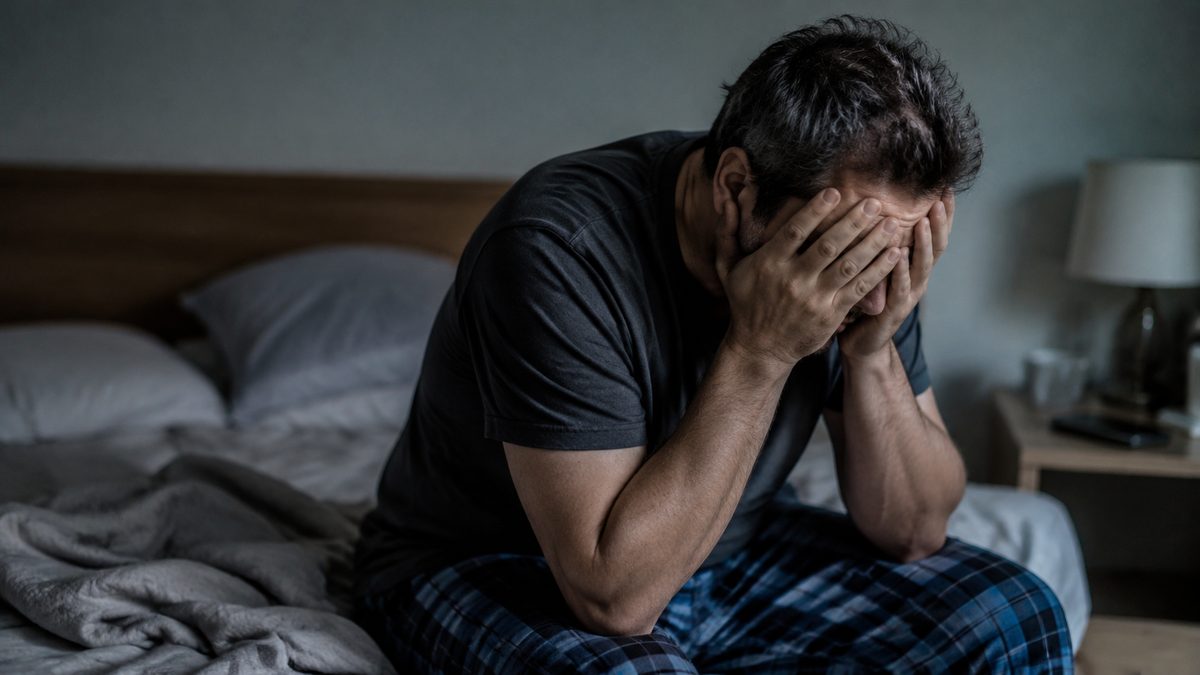
Every time you stop breathing during sleep, your body triggers a stress response. Your heart rate spikes. Oxygen drops. Your brain fires an alarm to wake you just enough to breathe again. This can happen 30, 60, even 100 times per hour.
Most people with sleep apnea have no idea it is happening. And that is the problem.
When sleep apnea goes untreated for months or years, the damage builds quietly. By the time symptoms become obvious, the body has already taken a serious hit.
What Are the Long-Term Health Risks of Untreated Sleep Apnea?
The research here is clear and consistent across multiple large studies.
Untreated sleep apnea raises your risk of cardiovascular disease significantly. A study published in the Journal of the American College of Cardiology found that people with severe untreated sleep apnea had a 2 to 3 times higher risk of heart attack and stroke compared to people without it.
Here is what the repeated oxygen drops actually do to your body over time.
- Heart disease and high blood pressure. Every time oxygen drops, your body releases adrenaline. Do that hundreds of times a night for years and your blood pressure stays chronically elevated. The American Heart Association links obstructive sleep apnea directly to hypertension, atrial fibrillation, and heart failure.
- Type 2 diabetes. Sleep fragmentation disrupts insulin sensitivity. Research from the American Journal of Respiratory and Critical Care Medicine found that people with untreated sleep apnea had significantly worse glucose regulation, independent of body weight.
- Stroke. The repeated drops in blood oxygen and the pressure spikes that follow damage blood vessel walls over time. Studies show untreated sleep apnea increases stroke risk by up to 4 times in men.
- Metabolic syndrome. This is the cluster of high blood pressure, high blood sugar, excess belly fat, and abnormal cholesterol. Untreated sleep apnea is independently associated with all four markers.
Can Untreated Sleep Apnea Cause Death?
Yes. The evidence supports this directly.
A landmark study from the University of Wisconsin followed over 1,500 people for 18 years. People with severe untreated sleep apnea had a 3 times higher risk of dying from any cause compared to people without it. Cardiovascular death was the most common cause.
Sudden cardiac death during sleep is also more common in people with untreated sleep apnea. A Mayo Clinic study found that people with sleep apnea were significantly more likely to experience sudden cardiac death between midnight and 6am, which is the opposite pattern seen in the general population.
In my experience reviewing this research, what stands out is that the risk is not just from one dramatic event. It is the slow, compounding damage to the heart and vascular system that eventually tips into a fatal outcome.
How Does Untreated Sleep Apnea Affect the Brain?
This is where things get particularly serious, and where most people are not getting the full picture.
Every oxygen drop during an apnea event stresses brain tissue. Over time, this causes measurable structural changes.
Research published in the journal Sleep found that people with untreated sleep apnea showed reduced gray matter volume in areas of the brain responsible for memory, attention, and emotional regulation. These are not subtle changes. They show up on MRI scans.
What I found striking in the data is that some of this brain tissue loss does not fully reverse even after treatment begins. Early intervention matters.
The cognitive effects people notice day to day include:
- Poor short-term memory
- Difficulty concentrating for more than a few minutes
- Slower reaction times
- Mood instability and irritability
- Depression and anxiety
A 2021 study in Nature Communications linked chronic untreated sleep apnea to a higher risk of developing Alzheimer’s disease. The proposed mechanism is that deep sleep is when the brain clears metabolic waste, including amyloid beta, the protein that accumulates in Alzheimer’s. Disrupt deep sleep long enough and that clearance system fails.
Does Untreated Sleep Apnea Get Worse Over Time?
In most cases, yes.
Sleep apnea tends to progress for several reasons. Weight gain worsens airway collapse. Aging reduces muscle tone in the throat. Inflammation from repeated oxygen drops makes the airway more reactive over time.
What I saw consistently in the research is that people who delay treatment often present years later with a more severe form of the condition than when they were first diagnosed. The Wisconsin Sleep Cohort study tracked this progression over time and found that untreated moderate sleep apnea frequently advanced to severe sleep apnea within 5 years.
There is also a feedback loop at work. Poor sleep drives weight gain. Weight gain worsens sleep apnea. Worse sleep apnea drives more weight gain. Without intervention, this cycle accelerates.
Can Untreated Sleep Apnea Cause Weight Gain?
This is one of the most underappreciated connections in sleep medicine.
When you do not get restorative sleep, two hormones shift in the wrong direction. Ghrelin, the hunger hormone, goes up. Leptin, the satiety hormone, goes down. The result is that you feel hungrier, crave high-calorie foods, and feel less full after eating.
Research from Stanford University found that people sleeping fewer than 8 hours had measurably higher ghrelin and lower leptin levels, and this correlated directly with higher body mass index.
Sleep apnea also raises cortisol. Chronically elevated cortisol promotes fat storage, particularly around the abdomen. And abdominal fat is one of the primary drivers of airway collapse during sleep.
When I tried to map this out as a system, the picture that emerged was that untreated sleep apnea does not just coexist with weight gain. It actively drives it through hormonal and metabolic pathways that are hard to override with willpower alone.
How Does Untreated Sleep Apnea Affect Daily Life?
The daily impact is significant and often misattributed to other causes.
People with untreated sleep apnea frequently get told they are lazy, unmotivated, or depressed. What is actually happening is that their brain never reaches the deep restorative sleep stages needed for physical and cognitive recovery.
The day-to-day effects include:
- Waking up unrefreshed even after 8 or 9 hours in bed
- Falling asleep during the day, sometimes without warning
- Headaches in the morning from overnight carbon dioxide buildup
- Reduced libido and sexual dysfunction
- Relationship strain from loud snoring and restless sleep
- Higher risk of workplace accidents and car crashes
The National Highway Traffic Safety Administration estimates that drowsy driving causes tens of thousands of crashes annually in the US alone, and untreated sleep apnea is one of the leading contributors.
In my experience, the people most affected are often the last to recognize it because the cognitive impairment from sleep deprivation reduces your ability to accurately assess your own functioning. You adapt to feeling terrible and start to think it is normal.
What Happens If Sleep Apnea Is Not Treated for Years?
The cumulative picture is serious. Here is a direct summary of what the evidence shows happens when what happens if sleep apnea is not treated goes unaddressed over the long term.